Conquer the technologies for constructing and intelligently managing high-concurrency time-division and frequency-division adaptive wide-area ground-air IoT.
Addressing the application needs of large-scale and diverse data generated by the three-stage observation (ascent, level drift, descent) of the round-trip intelligent radiosonde system, we enhance the capabilities of ground auxiliary application systems. We develop an information management platform supporting the round-trip intelligent radiosonde system and forecast service requirements, and establish a high-concurrency time-division and frequency-division adaptive wide-area ground-air IoT with seamless communication and monitoring coverage in the 3D observation space, realizing intelligent operation and management of the entire network.
Solve the problems of adaptive and intelligent scheduling management for observation services. Based on balloon trajectory atmospheric dynamics prediction models, balloon operation physical models, historical balloon movement data, reanalysis fields and forecast products, combined with real-time satellite positioning technology, real-time movement trend analysis technology and downlink real-time control flow communication technology, we achieve intelligent scheduled observation of fixed-altitude level drift balloons and radiosondes.
Solve the problem of comprehensive application of observation data. Research and utilize intelligent information processing technologies to develop an architecture suitable for data product processing and application service-oriented systems of round-trip intelligent radiosonde network observations, enabling 10-minute-level application of observation data.
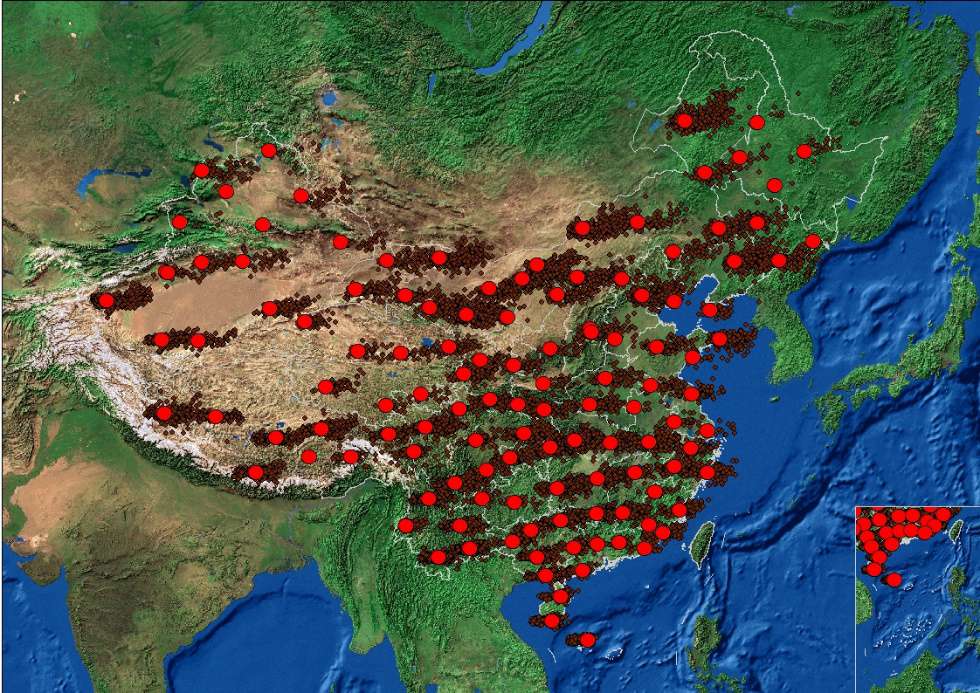
Upper-air atmospheric observation is the core foundational support for atmospheric science, accounting for over 90% of the data application in meteorological and climate forecast services. China has long established a comprehensive upper-air operational observation network in continental regions, with conventional radiosondes as the mainstay and effective supplements from ground-based, air-based and space-based observations. However, compared with developed countries, marine meteorological observation, especially marine upper-air atmospheric observation, is extremely insufficient in observation methods and station network layout, failing to meet the needs for numerical forecast accuracy and disaster prevention and mitigation. Among them, the radiosonde station network is sparse, with observation scope limited to coastal and offshore areas, insufficient spatiotemporal resolution, and automatic radiosonde stations struggling to densify the network in key areas of the South China Sea. China's coastal radiosonde stations in the Bohai Sea, Yellow Sea, East China Sea, South China Sea and Sea of Japan have sparse spacing, limited vertical observation capabilities for oceanic climate (with obvious seasonal gaps), and significant gaps in vertical observation data in marine climate-sensitive areas. The annual observation coverage of existing radiosonde stations and the twice-daily observations at 12-hour intervals are difficult to meet the needs of numerical forecasting and climate monitoring.
Due to constraints on launch conditions, the detection time and scope of balloons are generally limited after launch. Therefore, the existing radiosonde model has insufficient direct detection capabilities for upper-air meteorological elements, and needs improvement in both detection time and scope.
Single Means of Stratospheric Continuous ObservationCurrently, domestic stratospheric observation mainly relies on satellites or L-band radiosondes. However, due to technical limitations, it is impossible to conduct long-term, high-precision, high spatiotemporal resolution direct benchmark detection of the 3D structure field of oceanic atmosphere. This failure to effectively monitor the variation laws of stratospheric atmosphere and the interaction between troposphere, stratosphere and mesosphere has become another bottleneck in the scientific understanding, monitoring and forecasting of large-scale marine meteorological systems.
The existing radiosonde model adopts a one-way balloon ascent method: the balloon rises to an altitude of about 30,000 meters, explodes, and the detection ends, with a detection time usually around 70 minutes and a detection scope generally within 100 kilometers. Due to launch constraints, balloons are generally launched on land. Even if they fly towards the ocean after ascent, their detection time and scope are limited. Thus, the existing radiosonde model lacks sufficient direct detection capabilities for marine upper-air meteorological elements, requiring improvements in both detection time and scope. The round-trip level drift balloon can achieve three-stage detection ("ascent-level drift-descent") with a single launch, obtaining upper-air atmospheric radiosonde data for more than 6 hours. This will convert the current twice-daily operational radiosonde data (at 12-hour intervals) into four times a day (at approximately 6-hour intervals), while also acquiring two sets of continuous stratospheric observation data for more than 4 hours each, significantly improving the efficiency of radiosonde observations. Meanwhile, under the influence of upper-air winds, the scope of balloons drifting for more than 4 hours is greatly expanded. After parachute descent, vertical observation data over the ocean far from land can be obtained, enhancing the accuracy of numerical forecasting and the meteorological support capacity for disaster prevention and mitigation.
While the new observation form brings more value, its high frequency, cross-region and long-duration detection also pose enormous challenges to traditional observation networks. The Meteorological Radiosonde Operational Cloud Platform is designed to support the above new forms of radiosonde services, adopting advanced technologies such as new-generation IoT, big data and intelligent control.
Current Data Access Pathway: We acknowledge that establishing a fully open, automated registration and download portal is a work in progress. In the interim, to ensure responsible data sharing and support collaborative science, we have clarified the access procedure. Researchers interested in the ADDRS dataset for scientific use are invited to contact the ADDRS research team directly via gqyaoc@cma.gov.cn to register. Data sharing will be facilitated through joint research initiatives, which we believe is the most effective way to expand data utilization and foster scientific collaboration at this stage. This point has been explicitly added to the revised Data Availability Statement. We appreciate your feedback, which has directly led to a more robust, usable, and clearly described data sharing mechanism for our manuscript.
attachment:
 400-663-9589
  infobj@cnr7.com

Beijing ICP License No. 17069355 Beijing Ruanqi Technology Co., Ltd. All rights reserved